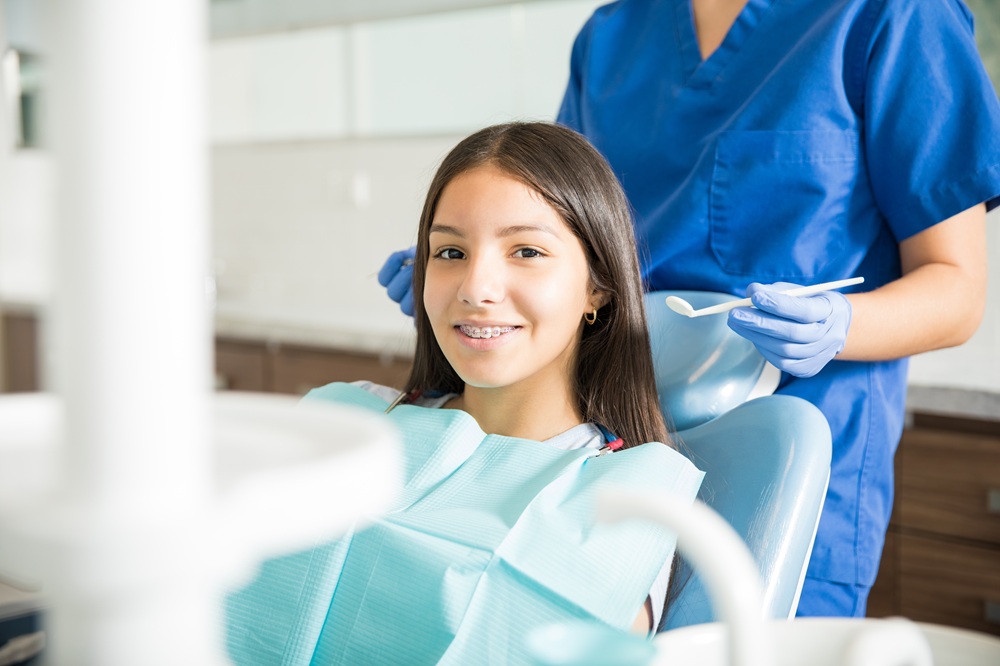
Braces help move your teeth into the right position, but keeping them clean can be a little harder during treatment. Food particles and plaque can easily get trapped around the brackets and wires, making it difficult to clean every area with a regular toothbrush. If plaque stays on your teeth for too long, it can lead to white spots on the enamel. When getting braces near you, learning how to clean around brackets and wires is important for protecting your teeth. With simple daily cleaning habits and regular dental checkups, you can keep your teeth cleaner and reduce the risk of white spots during treatment.
What Causes White Spots During Braces?
White spots, also known as decalcification, form when plaque stays on your enamel for too long. Bacteria in plaque produce acids that dissolve minerals from the tooth surface, leaving chalky, pale patches behind.
You’ll usually find these spots right around the brackets, since that’s where food and plaque like to build up. Once a white spot forms, it doesn’t always go away, so it’s much easier to prevent it in the first place.
Brushing Around Brackets
Good brushing does most of the work. To clean around your braces:
- Brush after meals, or at least twice a day.
- Use a soft or orthodontic toothbrush with fluoride toothpaste.
- Tilt the bristles down to clean the top of each bracket.
- Tilt the bristles up to clean the bottom of each bracket.
- Brush for about two minutes each time.
An electric toothbrush can make this easier.
Cleaning Between Brackets and Under Wires
A toothbrush often misses the small gaps between brackets and the space under the archwire. These tools can help:
- Interdental brushes: These small, cone-shaped brushes slide between brackets and under the wire to clear out trapped food.
- Floss threaders: A threader helps you pull regular floss under the wire so you can clean between teeth and along the gumline.
- Orthodontic floss: This floss has a stiff end that slips under the wire without a separate threader.
- Water flossers: A steady stream of water rinses away food debris, though they work best alongside regular flossing.
Try to floss once a day. It gets quicker with practice.
Everyday Habits That Protect Your Enamel
What you eat and drink also affects your enamel:
- Cut back on sugary snacks and drinks, especially between meals.
- Avoid sipping soda or sports drinks throughout the day.
- Rinse with water after eating if you can’t brush right away.
- Use a fluoride mouthwash if your dentist suggests one.
Disclosing tablets can also help. These chewable tablets briefly stain plaque so you can spot the areas you missed.
Keep Up With Professional Cleanings
No matter how well you brush and floss, some plaque can still turn into tartar in hard-to-reach places. A cleaning at a dental clinic near you removes it, and your dentist can spot white spots while they’re still small.
If you’re nearby, a dental clinic in Lendrum can also walk you through cleaning tips that work with your braces.
Protect Your Smile Throughout Treatment
At MAK Dental, our team has been caring for Edmonton families. We can help you build a daily cleaning routine to keep your teeth and enamel healthy throughout your braces treatment. We offer direct billing and welcome new patients of all ages.
Book an appointment online today to discuss your dental care needs and keep your smile healthy during orthodontic treatment.
FAQ’s
Can white spots from braces go away?
Mild spots may fade over time as your enamel takes back some of its lost minerals. Others may need fluoride treatments or cosmetic options, which your dentist can discuss.
How often should you replace your toothbrush with braces?
Brackets wear down bristles quickly, so plan to replace your brush every two to three months, or sooner if the bristles look frayed.
Is a water flosser enough on its own?
Not usually. A water flosser helps, but you still need traditional floss or interdental brushes to remove sticky plaque between teeth.
What is the best way to clean between braces and wires?
Use a soft-bristled toothbrush to clean around each bracket and along the wires. An interdental brush can help remove food and plaque from small spaces. Daily flossing also helps clean between your teeth.